In this guide

A small first order of branded eyewear cases should help you learn what fits your frames, suits your store and sells with your range. The best quotation is therefore one that clearly defines the case, branding, packing and delivery basis. A low unit price becomes difficult to compare when setup charges, color splits or freight are left outside the quote.
This guide explains how to brief a supplier, compare small-batch options and approve a repeatable order. Availability, minimum quantities and branding options must be confirmed for each selected TOPYOU catalog model.
1. Choose the right starting point
There are three useful purchasing routes. First, an available finished case can be bought without changes, subject to stock and order conditions. Second, an established case design may be produced or supplied with an agreed logo application. Third, a fully custom project can change structure, dimensions, materials and appearance.
An existing design does not necessarily mean finished stock is on the shelf. Ask whether the quoted item is available now, made against an order or waiting for a material allocation. Request the exact color, quantity and expected replenishment position. Likewise, a logo-ready surface should not be assumed compatible with every printing or stamping process.
For a first order, select the smallest number of specifications that meets your commercial need. If one case can accommodate several of your frame families, consolidating those styles may simplify stock management. Confirm that fit with actual eyewear before consolidating.
2. Ask what the MOQ applies to
A minimum order quantity can apply to the case model, material, color or logo version. It may also reflect a material purchase or a production batch. The total quantity written at the top of a purchase order does not explain how those requirements apply to individual variants.
For example, an illustrative order of 600 cases split across three colors and two logos creates six combinations of 100 units. That is operationally different from 600 identical cases. This example is not a TOPYOU MOQ or quotation. Ask the supplier to confirm every combination in writing, including whether colors or artwork can be combined within the quoted minimum.
Domestic packaging supplier FAQs and international small-business discussions repeatedly raise MOQ, sampling and delivery questions. They are useful prompts for a procurement brief, but another supplier’s published minimum or a forum user’s order is not evidence of what your chosen eyewear case can support.
3. Match the logo process to the actual surface
Consider both the desired appearance and the substrate. Debossing creates an impression; foil stamping adds a decorative foil; screen printing deposits ink. Their suitability depends on the surface, geometry, tooling and process. A textured cover, curved lid or stitched area can constrain the usable artwork zone.
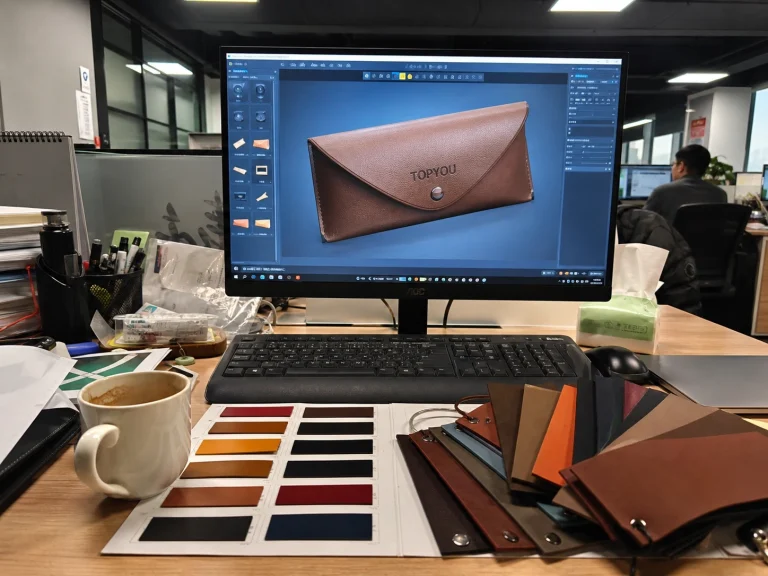
Supply vector artwork, the intended size, position and color reference. Ask for a proof on the selected material. Check fine lines, small lettering, edge definition, placement and consistency. Do not judge production feasibility from a digital logo mockup alone.
Agree an appropriate durability check and acceptance method for the selected construction. A generic claim such as “permanent logo” is less useful than a documented sample and a clear description of the intended handling. If a process needs a plate or die, ask whether its charge is included, who retains it, whether it can be reused and what happens after an artwork revision.
4. Compare first-order cost on a common basis
Request separate entries for product, branding, setup, samples, individual packing, export packing and transport. Where relevant, identify insurance, customs clearance, duties and taxes, and clarify which party is responsible. Confirm currency, quote validity, payment terms and the agreed delivery term with its named place.
A simple comparison is: total applicable order cost divided by the number of usable units received. For planning, also consider inventory carrying cost and the effect of unsold variants. Do not quietly mix a freight-excluded factory quote with a delivered quote and conclude that the lower number is better value.
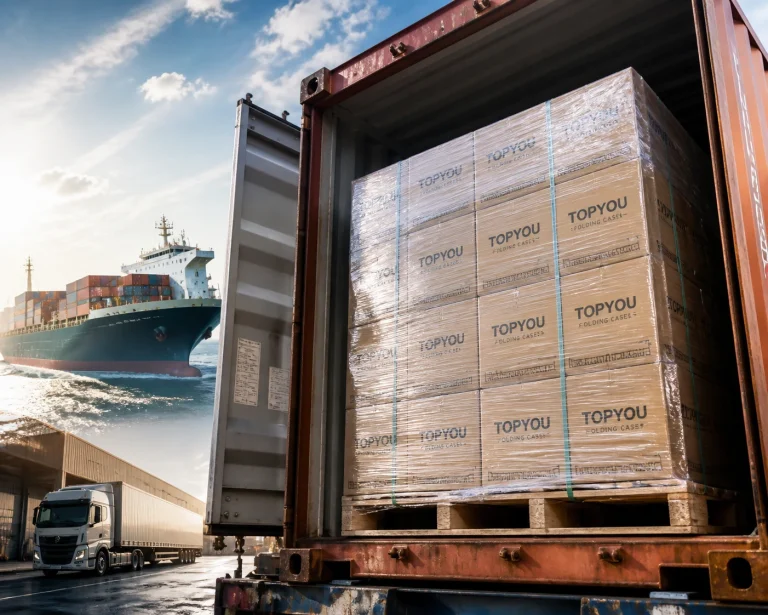
Foldable cases may reduce shipping volume in some configurations, but compare actual packed dimensions and weight. Ask for units per carton, carton size, gross weight and whether the quoted cases ship assembled or flat. The freight calculation depends on the carrier and route; obtain a shipment-specific quote.
5. Run a practical fit and appearance review
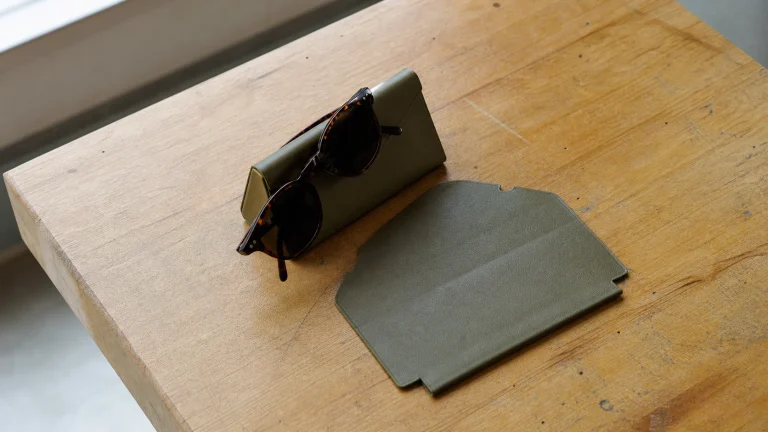
Test a representative selection of the frames you actually sell: include your widest folded frame, deepest sunglass shape and any unusually thick temples. External case dimensions are not usable internal dimensions. Confirm natural closure without forcing the lid and inspect where the eyewear touches the lining.
Review the supplied sample under consistent lighting. Record the case reference, color, lining, closure, logo and packaging. Photograph the frame inside the case as well as the exterior. If the sample is unbranded, treat it as a construction or fit sample; a separate branding approval may still be required.
Keep an approved reference for receiving checks and reorders. State how substitutions or visible differences will be handled. A photograph is useful evidence of appearance, but cannot establish texture, fit or opening feel on its own.
6. Plan the first order and the reorder together
Separate artwork approval, sampling, production readiness, dispatch and transit in the schedule. “Lead time” may describe only one of these stages. Confirm what starts the clock: payment, artwork approval, material availability or final sample sign-off. Allow time for a revision rather than assuming the first proof will be approved.
For reorders, retain a specification record containing the model, material, color, artwork version, packing and approved sample reference. Ask how future availability and batch color variation are managed. A repeat order should identify the approved version explicitly; “same as last time” can become ambiguous when artwork or materials have changed.
Set a reorder trigger using your own sales rate, remaining stock and expected replenishment time. Avoid relying on an assumed permanent stock position. Confirm available quantity and production conditions when placing the next order.
A purchase brief you can send today
- Case model and intended eyewear range, with folded frame dimensions.
- Total quantity and a breakdown by color and logo version.
- Vector artwork, proposed branding size and location.
- Required sample type and approval contact.
- Individual packing, master-carton requirements and destination.
- Target arrival date and the costs to include in the quotation.
- Acceptance criteria, substitution approval and reorder reference.
Browse TOPYOU catalog products, then request confirmation of availability and branding options. A clear brief helps the team identify a suitable route and provide a comparable quotation.
Reading behind this guide
- Small-business discussion: finding small-batch custom packaging — anecdotal purchasing concerns, not supplier commitments.
- Chinese packaging supplier guide to MOQ, samples and lead time — a different packaging sector; its quantities and timelines are not applied to eyewear cases here.
YOUR NEXT STEP
Turn your packaging brief into a clear plan.
Share your preferred style, quantity, materials and destination. Our team can help confirm the options for your project.
Discuss your project